

Green January: Cervical Cancer Awareness Month — Know yourself, love yourself, and take care of yourself
There are several types of cancer that can appear in different parts of the body; however, some are more common in women, who should pay attention to signs, symptoms, and prevention.
To raise public awareness on this topic, the American Society of Clinical Oncology (ASCO) assigned a color to each tumor type; each month there is an awareness campaign for a type of cancer, and thus Green January was born, focused on cervical cancer prevention.
According to the National Cancer Institute (INCA), cervical cancer is among the three most frequent malignant cancers in women — behind only breast and colorectal cancer — and is also the fourth leading cause of cancer death among women in Brazil. A survey by the institute found that each year in the 2020/2022 triennium, 16,590 new cases of cervical cancer are diagnosed in Brazil, with an estimated risk of 15.43 cases per 100 thousand women.
It is estimated that in Brazil more than 16 thousand women will receive a cervical cancer diagnosis and there will be more than 5 thousand deaths — a number that could be avoided by having the gynecological exam (Pap test) done regularly, because after an early diagnosis the chances of cure are very high and treatment is simple and straightforward.
In an interview with the Jornal da Câmara de São Paulo, oncologist and director of the Instituto Paulista de Cancerologia, Hezio Jadir Fernandes Júnior, spoke about the importance of prevention and early diagnosis, noting that a study found 80% of patients with cervical cancer were diagnosed already at an advanced stage.
"Women only develop symptoms when they are already at an advanced stage, and what we want is to find these tumors as early as possible, when symptoms practically do not exist, so the chances are close to 100%." says Dr. Hezio.
Knowing how important prevention is, how can you do it in the best way?
The first step in preventing cervical cancer is reducing the risk of infection with the virus that infects skin or mucous membranes, HPV, and to protect against human papillomavirus (HPV), it is recommended:
I. Get the HPV vaccine offered by the PNI (National Immunization Program)
II. Use condoms in all intimate contact, even if the person has no visible warts
III. Do not share unwashed underwear or bath towels
IV. Choose cesarean section if lesions can be seen with the naked eye at the end of pregnancy
Another fundamental step is the uterine cervical cytopathology exam, also known as the Pap test, a preventive exam that screens for and detects changes in cervical cells.
According to INCA, there are risk factors that affect the chance of contracting a disease. For cervical cancer, some factors are:
I. Smoking
II. Immunosuppression
II. HPV infection
IV. 3 or more pregnancies
V. Chlamydia infection
VI. Oral contraceptive pills
VII. Age, economic situation, and diet
VIII. Becoming sexually active very early and having many sexual partners
It is important to watch for signs, because most women with cervical cancer in the initial stage have no symptoms. At more advanced stages, some symptoms are:
I. Bleeding
II. Blood in urine
III. Difficulty urinating
IV. Continuous pain in the pelvic region
V. Tingling and swelling in the legs
VI. Obstruction of the bladder and lower intestine
VII. Difficulty having bowel movements and bleeding
VIII. Vaginal discharge with color and odor
IX. Pain: during sexual intercourse, lower abdomen, pain at rest, and back pain
How often should the Pap test be done, and who should have it?
The first two exams should be done once a year, and if both results are negative, the next can be done three years after the last result. If the result is abnormal, the recommendation is to repeat the exam every six months or even be referred for a more detailed exam, such as colposcopy.
In general, doctors recommend that the exam be done by women between 25 and 64 years old who are sexually active.
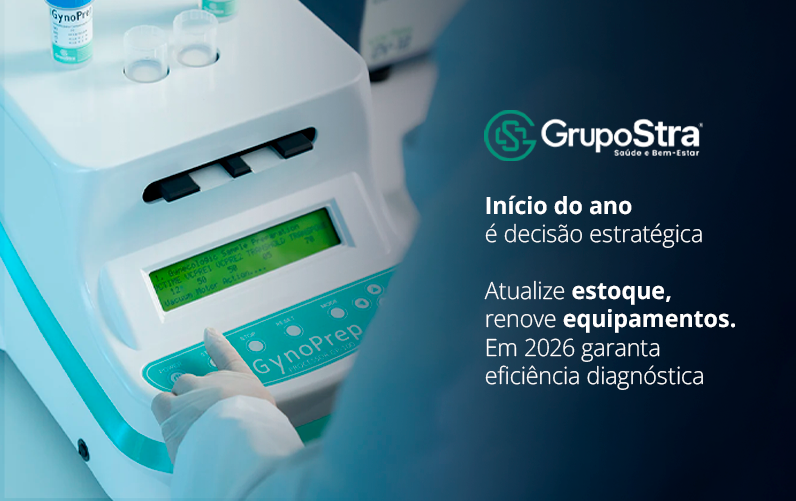
GynoPrep and its innovative method
Previously, collections were done conventionally, in the smear method, where samples were collected and placed directly on slides; however, with that method the number of unsatisfactory samples and re-collections was higher. With the liquid-based cytology method — GynoPrep, the number of unsatisfactory samples is significantly reduced, because GynoPrep liquid is a complete preservative solution capable of preserving cells and ensuring that 100% of the collected sample is sent to the laboratory for analysis and processing.
Below, a demonstration photo of a collection done through the smear method, where samples were collected and placed directly on slides:
Now, with the liquid-based cytology method — GynoPrep, there is higher quality in sample collection and more assertive reports. Below, a demonstration photo of sample collection using liquid-based cytology — GynoPrep:
How does the GynoPrep collection process work?
I. Labeling, where the sample and conventional slides are identified
II. In step 2, samples and slides 1A and 1B are positioned in orifices A and B on the Vortex, where homogenization takes place for 20 seconds
III. Insert the double filters into the GP-1000 and pour the samples into the filters, dispensing 1 to 3 ml. Process up to 100 slides per hour and two slides in less than 1 minute!
IV. The filters retain all mucus, blood, and other components that are not relevant to the exam and, through the membrane, imprint the samples on the slides without failures; afterward the slides are ready for analysis
V. Finally, the slides go to drying at room temperature without alcohol
Introducing our news — GynoPrep
In recent months, the GynoPrep method has undergone some changes; they were:
I. New bottle — The new bottle has the logo embossed on the cap, and internal reliefs that help cells detach from the brush
II. Custom bottles — Now our customers can customize bottles with their logos and colors
III. Bottles for non-gynecological collections — Now bottles come with labels in different colors indicating (non-gynecological)
Women who won
Receiving a cancer diagnosis is not easy; however, hearing and reading stories from women who were cured helps patients keep hope throughout treatment until recovery. We at Grupo Stra made a point of sharing testimony from a former cancer patient, to reinforce that no one is alone on this journey.
Verônica C. de Assis Barcelos — Cervical cancer "I started having problems one night when I had intercourse and had very heavy bleeding; I was desperate." According to Verônica, from the middle of treatment onward was a difficult part, because her body began to tire due to radiation therapy and chemotherapy, but it was important to see her family's support and care in small day-to-day details, such as household chores. On Verônica's last session day, the doctor said there was no more lesion and that everything was fine.
"So yes, it is painful, but I won." Verônica says in an interview.
Treatment
After a cervical cancer diagnosis, the responsible physician will refer the patient for indicated treatment, considering the stage of cancer and the patient's age. Treatment options are:
Surgery: Usually done in the early stages of cancer. It consists of removal of the uterus and its cervix and the upper part of the vagina. Although effective in most cases, this procedure prevents the patient from having a later pregnancy. The patient should discuss the decision with the doctor.
Radiation therapy: In this treatment the patient receives precise radiation at the tumor site. Side effects may include fatigue, itching at the site, and skin reactions.
Chemotherapy: An effective treatment used in more advanced stages of cancer. In this case the patient receives medications administered intravenously or by infusion into the vein. Side effects include fatigue, hair loss, bruising, bleeding, and anemia.
Targeted therapy: Use of medications developed especially for this type of cancer. This treatment has fewer side effects than conventional chemotherapy.
Immunotherapy: This treatment uses drugs that stimulate a person's immune system to recognize and destroy cancer cells. Side effects include nausea, headache, skin rash, loss of appetite, constipation, joint and muscle pain, and diarrhea.
It is important to understand that even with the disadvantages of each treatment, such as side effects, or in other cancers where breast and hair loss occur, each method can save lives. So prevent and take care of yourself.