

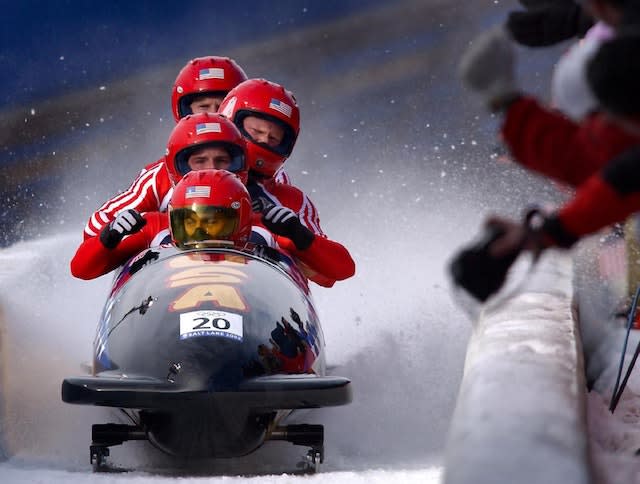
Did you know that at the Olympic Games the gold medal is actually silver? That's right—it's not something everyone imagines, but it has been that way since 1912.
The Olympic Games are the world's largest sporting event, held every four years, in which athletes from more than 205 countries compete in different sports. There are also the Paralympic Games, likewise divided between summer and winter, for athletes with disabilities.
For those who love sports, the fact that the Olympic Games last only 12 days is painful, but the good news is that the next competition already has a date and location set—2024, in Paris. Au revoir! ✈️
Baron de Coubertin
The title of founder of the Modern Olympic Games is attributed to the Frenchman Pierre de Coubertin, who was passionate about sport and saw it as a central element of education. Inspired by Greece's historical legacy and archaeological excavations that took place in Olympia, Coubertin founded the International Olympic Committee (IOC) in June 1894.
In 1896, the first Olympic Games of the modern era took place in Athens, Greece. With 14 countries, the event had 241 athletes—detail: they were all men, because at the time Pierre de Coubertin forbade women from competing. The sports were: athletics, cycling, fencing, gymnastics, weightlifting, wrestling, swimming and tennis.
Curious fact: Nobody won a gold medal; first-place finishers were awarded silver medals and olive branches and a diploma. Athletes who finished second received copper medals and laurel branches. Third-place winners did not receive medals.
( click here and discover the most fun, dynamic and somewhat bizarre sports invented by human beings)
The famous Olympic symbol
The interlocking rings are different colors, representing each continent: blue: Europe, yellow: Asia, black: Africa, green: Oceania and red: the Americas. At the end of each edition of the Games, the Olympic Flag is passed to the next host city as an express expression.
New sports, more representation
As part of the IOC's major goal of making the Olympics more attractive to younger spectators, the International Olympic Committee has been innovating and bringing more appealing sports to young audiences, such as karate, surfing, skateboarding, baseball/softball and sport climbing
In 2015, the year the sports were confirmed, the committee president said:
" We want to bring sport to young people […] With so many options young people have, we can no longer expect them to come to us automatically—we have to go to them."
Through representation in some sports, young people are inspired to fall in love with the world of sport. An example was what happened at the 2010 Olympic Games, where snowboarding became the darling of the Winter Games because of presentations by youth cultural icons. After that, the number of spectators aged 18 to 24 increased by 48%.
Since then, a new generation of young, cool snowboarders continues to inspire and attract global audiences.
Coming up …
And the IOC has already announced what's new for the Paris 2024 Olympic Games 🥳
There will be 329 events in 38 sports, with gender equality. The inclusion of extreme slalom canoeing, breakdance and new mixed events are among the main novelties. According to the IOC, today's decision will help make the Paris 2024 Olympic Games suitable for a post-coronavirus world.
That's all for today—get behind this cheering and support the world of sport.